


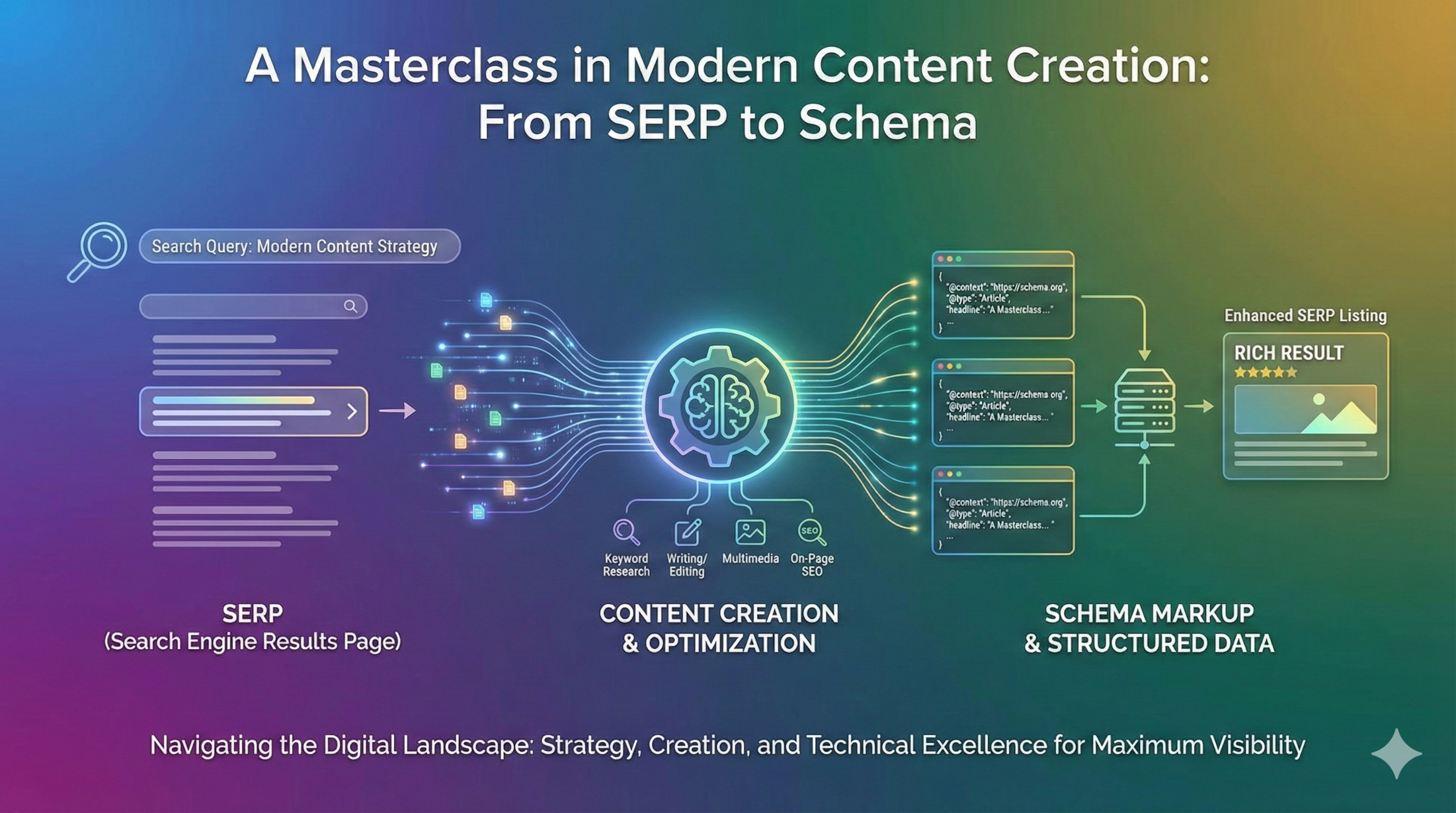
In the sprawling digital landscape of today, creating content that not only resonates with an audience but also achieves high visibility on search engines is a complex art and science. The journey from a simple idea to a high-ranking, technically sound article is a systematic process. It begins not with writing, but with deconstruction. I'll begin with the SERP analysis and outline, then move to research integration, and finally draft the full JSON-LD and HTML article. This structured approach is the key to navigating the complexities of Search Engine Optimization (SEO) and delivering true value to the reader.
This guide will illuminate each stage of that process, transforming it from a daunting task into a clear, actionable blueprint. We will explore how to reverse-engineer Google's success signals, build a strategic framework, enrich your content with unparalleled authority, and finally, package it in a way that search engines can both understand and reward. By the end, you will have a comprehensive methodology for creating powerful digital content that stands the test of time and algorithms.
Part 1: The Foundation - Mastering SERP Analysis
Before a single word is written, the battlefield must be surveyed. In SEO, this battlefield is the Search Engine Results Page (SERP). SERP analysis is the process of examining and evaluating the results that a search engine displays for a specific query. It’s a crucial first step that moves content creation from a guessing game to a data-driven strategy. By taking the time to analyze what is already ranking and why, you lay the foundation for stronger visibility and better long-term SEO results.
What is a SERP and Why is it Your Starting Point?
A SERP is far more than a simple list of ten blue links. Modern SERPs are a dynamic mosaic of information, including organic search results, paid ads, featured snippets, "People Also Ask" (PAA) boxes, video carousels, local business packs, and image results. Analyzing these components provides profound insights into audience behavior, competitor strategies, and hidden ranking opportunities. Ignoring this step is like setting sail without a map; you might have a destination, but you have no idea about the currents, the weather, or the other ships you'll be competing against.
A Step-by-Step Guide to Conducting SERP Analysis
A thorough SERP analysis can be broken down into a series of methodical steps that reveal the story behind a search query.
Step 1: Define Your Target Keyword and Assess its Potential
Every analysis begins with a keyword. This is the phrase you believe your target audience uses to find information. Once you have a primary keyword, it's essential to assess its viability. This involves looking at two key metrics: search volume and keyword difficulty. High-volume keywords promise significant traffic, but often come with intense competition. SEO tools can help you find a balance, identifying keywords with substantial traffic potential but moderate difficulty, which represent the sweet spot for optimization efforts.
Step 2: Uncover the "Why" - Analyzing Search Intent
Search intent is the underlying purpose a person has when they type a query into a search engine. Google's primary goal is to satisfy this intent as quickly and accurately as possible. Therefore, aligning your content with search intent is non-negotiable. There are generally four main types of search intent:
- Informational Intent: The user is looking for information. Examples include "how to change a tire" or "what is the capital of Nepal." These queries are best served by detailed blog posts, how-to guides, and informational articles.
- Navigational Intent: The user wants to go to a specific website, like searching for "Facebook login" or "Yoast." Ranking for these terms is only beneficial if your site is the intended destination.
- Commercial Intent: The user is researching before making a purchase. Queries like "best running shoes 2025" or "reviews of Samsung Galaxy phones" fall into this category. This intent is met with comparison articles, reviews, and detailed product guides.
- Transactional Intent: The user is ready to buy. Searches like "buy tickets to The Statue of Liberty" or "cheap flights to Paris" signal a clear desire to complete a transaction. E-commerce product pages and booking forms are the ideal content for this intent.
By analyzing the top-ranking pages for your keyword, you can determine the dominant search intent Google has identified and ensure your content format aligns with it.
Step 3: Deconstruct Top-Ranking Content
The pages on the first page of Google have passed the search engine's rigorous tests. Your job is to figure out why. Analyze the structure of the top 3-5 results. Look at their titles, heading hierarchy (H1, H2s, H3s), and the subtopics they cover. Are they listicles? In-depth guides? Do they use a lot of images or videos? This deconstruction helps you identify common patterns and essential topics that users expect to see.
Step 4: Mine SERP Features for Content Gold
SERP features like the "People Also Ask" (PAA) boxes are a goldmine of content ideas. These are the literal questions that users are asking related to your topic. Integrating these questions and their answers directly into your content, especially in an FAQ section, is a powerful way to enhance relevance and potentially capture a featured snippet.
Step 5: Identify Content Gaps and Opportunities
A content gap is a topic or keyword that your competitors are ranking for, but you are not. It can also be an aspect of a topic that top-ranking pages have failed to cover adequately. Perhaps the current articles are outdated, lack real-world data, or have thin, unhelpful answers. Finding these weak spots is your opportunity to create something better, more comprehensive, and more valuable, giving you a competitive edge.
Part 2: Building the Blueprint - Strategic Outlining
Once your SERP analysis is complete, you are armed with a wealth of data about what it takes to rank. The next step is to translate those insights into a structured plan: the content outline. An outline is the skeleton of your article, ensuring a logical flow, comprehensive coverage of the topic, and a clear path for the writer to follow. It turns a chaotic collection of ideas into a coherent and strategic blueprint.
From Raw Data to a Cohesive Structure
A data-driven outline is built directly from the findings of your SERP analysis. It’s not about reinventing the wheel, but about building a better, more robust version of what is already proven to work, while adding your own unique value.
Creating Your Data-Driven Outline: A Step-by-Step Process
Step 1: Craft a Compelling H1 and Title Tag
Your H1 heading is typically the main title of your article and should have the most SEO weight. It should contain your primary keyword and be crafted to grab the reader's attention. The title tag, which is what appears in the SERP, is equally crucial and should be kept under 60 characters to avoid being cut off. It should serve human readers first while strategically incorporating the keyword.
Step 2: Map SERP Subtopics to H2 Headings
Look at the common H2 and H3 headings used by the top-ranking competitors. These represent the core subtopics that users and search engines expect to see. Use these themes to build the main sections of your article, creating your own H2 headings. This ensures your content covers the topic as comprehensively as the current winners.
Step 3: Use "People Also Ask" for H3s and FAQs
The questions you gathered from the PAA boxes in your SERP analysis are perfect candidates for H3 subheadings or a dedicated FAQ section at the end of your article. Answering these questions directly makes your content highly relevant and user-centric.
Step 4: Integrate Your Unique Value and Fill the Gaps
This is where you differentiate your content. Based on the content gaps you identified, create sections that offer something new. Did competitors lack expert opinions? Add a section with quotes from industry leaders. Was their data outdated? Include a section with the latest statistics and research. This is how you create content that is not just as good as the competition, but demonstrably better.
Step 5: Plan for Readability and User Experience
A great outline considers not just what you will say, but how you will present it. Plan to use short paragraphs, bullet points, numbered lists, and bolded text to break up large blocks of text and make the content scannable. A positive user experience is a crucial part of modern SEO.
Step 6: Strategize Internal and External Links
As you build your outline, note opportunities to link to other relevant articles on your own website (internal links) and to authoritative external sources. Internal linking helps distribute "link equity" and guides users through your site, while external linking to reputable sources builds trust and credibility.
Part 3: Fleshing It Out - Deep Research and E-E-A-T Integration
With a solid blueprint in hand, the next phase is to breathe life into your outline with high-quality research and expert insights. This stage is about more than just filling in the blanks; it's about building a piece of content that demonstrates experience, expertise, authoritativeness, and trustworthiness—the four pillars of Google's E-E-A-T framework. In 2025, adhering to these principles is non-negotiable for SEO success.
Embracing the E-E-A-T Framework
E-E-A-T is a set of principles from Google's Quality Rater Guidelines used to evaluate content quality. While not a direct ranking factor, it heavily influences the signals that are.
- Experience: Does the content demonstrate firsthand, real-world knowledge? This is about showing you've actually used the product, implemented the advice, or visited the place you're discussing.
- Expertise: Is the content created by a subject-matter expert with verifiable credentials? For "Your Money or Your Life" (YMYL) topics like health and finance, this is especially critical.
- Authoritativeness: Are other credible sites referencing or linking to your brand or content? Authority is built over time through backlinks and mentions from other respected sources in your industry.
- Trustworthiness: Is your site secure, transparent, and backed by real sources? This includes everything from having an SSL certificate (HTTPS) to clear author information and citing your sources.
Techniques for High-Quality Research and Integration
To build content that excels in E-E-A-T, your research must go beyond a simple Google search.
1. Prioritize Primary and Authoritative Secondary Sources
Instead of just rewriting competitor blogs, seek out original sources. This could include academic studies, government reports, peer-reviewed research, or interviews with industry experts. When using statistics, always link directly to the source. This not only provides proof but also enhances the trustworthiness of your content.
2. Showcase Firsthand Experience
Where possible, inject your own unique experience into the content. Use phrases like, "When I tested this feature..." or "In my experience...". Include original photos, screenshots, or videos that you created. This personal touch is difficult for competitors or AI to replicate and directly addresses the "Experience" component of E-E-A-T.
3. Feature Verified Experts
Give your content a human face. Assign a credible author with a detailed bio and links to their social profiles or professional credentials. If you're not the expert, reach out to one for a unique quote or feature a section with expert commentary. This directly bolsters both Expertise and Authoritativeness.
4. Synthesize, Don't Summarize
The goal of research is not to simply collect facts but to synthesize them into new insights. Combine information from multiple sources to form a more comprehensive conclusion. Balance the presentation of detailed information with readability by using visuals like charts and infographics to make complex data easy to understand.
5. Keep Content Fresh and Accurate
Information goes stale. Part of building trust is ensuring your content is up-to-date. Regularly review and update your articles with the latest information, statistics, and trends. Overlooking outdated information or broken links can quickly diminish your credibility.
Part 4: The Final Polish - Drafting the Full JSON-LD and HTML Article
The final stage of content creation is the technical assembly. This involves writing the content within a clean, semantic HTML structure and augmenting it with JSON-LD structured data. This final polish ensures that your meticulously researched and outlined article is perfectly understandable to search engine crawlers, maximizing its potential for high rankings and rich results.
HTML Best Practices for SEO
Clean and semantic HTML is the foundation of on-page SEO. It provides a clear structure that helps search engines understand the hierarchy and context of your content.
- Proper Heading Hierarchy: Use only one
<h1>tag per page for your main title. Subsequent sections should be organized logically with<h2>,<h3>, and so on. Never use heading tags for purely stylistic reasons; their purpose is to structure content. - Semantic HTML5 Elements: Whenever possible, use semantic tags like
<article>,<section>,<nav>, and<aside>. These tags provide more contextual information to search engines than generic<div>tags. - Descriptive Meta Tags: Your
<title>tag and meta description are your sales pitch on the SERP. The title should be under 60 characters, and the description around 155 characters, both incorporating your primary keyword naturally. - Image Optimization: All images should have descriptive
altattributes. This helps search engines understand the image's content and improves accessibility for visually impaired users. - Clean Linking: Use descriptive anchor text for your links. Instead of "click here," use anchor text like "read our guide to SERP analysis." This provides context to both users and search engines.
Unlocking Rich Results with JSON-LD
JSON-LD (JavaScript Object Notation for Linked Data) is Google's preferred format for implementing structured data. It's a way of annotating your webpage's content in a machine-readable format, making it easier for search engines to understand and index. The primary benefit of this is qualifying for "rich results" or "rich snippets"—enhanced listings in the SERPs that can include star ratings, FAQs, images, and more. These have been shown to improve click-through rates by as much as 30%.
Implementing Common JSON-LD Schemas
You can add JSON-LD to your page by embedding it within a <script type="application/ld+json"> tag in the <head> or <body> of your HTML. Here are two essential schemas for a typical article:
1. Article Schema
This schema describes the core details of your article. Key properties include headline, image, author, datePublished, dateModified, and publisher. Properly implementing this schema helps Google understand the piece as a news article or blog post, making it eligible for inclusion in carousels and other special SERP features.
<script type="application/ld+json">
{
  "@context": "https://schema.org",
  "@type": "Article",
  "headline": "A Masterclass in Modern Content Creation: From SERP to Schema",
  "author": {
    "@type": "Person",
    "name": "Expert Author"
  },
  "publisher": {
    "@type": "Organization",
    "name": "Your Website Name",
    "logo": {
      "@type": "ImageObject",
      "url": "https://example.com/logo.png"
    }
  },
  "datePublished": "2025-11-26",
  "dateModified": "2025-11-26",
  "image": "https://example.com/featured-image.jpg"
}
</script>
2. FAQPage Schema
If you've included an FAQ section based on your "People Also Ask" research, you should mark it up with FAQPage schema. This schema consists of a series of Question and Answer pairs. When implemented correctly, it can make your page eligible for an interactive FAQ rich result directly in the SERPs, significantly increasing your visibility and providing immediate answers to users.
<script type="application/ld+json">
{
  "@context": "https://schema.org",
  "@type": "FAQPage",
  "mainEntity": [{
    "@type": "Question",
    "name": "What is SERP analysis?",
    "acceptedAnswer": {
      "@type": "Answer",
      "text": "SERP analysis is the process of evaluating the top results on a Search Engine Results Page (SERP) to understand search intent, analyze competition, and identify ranking patterns for a specific keyword."
    }
  },{
    "@type": "Question",
    "name": "Why is E-E-A-T important for SEO?",
    "acceptedAnswer": {
      "@type": "Answer",
      "text": "E-E-A-T (Experience, Expertise, Authoritativeness, Trustworthiness) is a set of principles Google uses to evaluate content quality. Adhering to E-E-A-T helps build trust with users and search engines, leading to better rankings and resilience against algorithm updates."
    }
  }]
}
</script>
Tools like Google's Rich Results Test can be used to validate your structured data and ensure it's free of errors before publishing.
Conclusion: A Holistic Approach to Content Excellence
Creating content that consistently performs well in search engines is not a matter of luck; it is the result of a deliberate, multi-stage process. It begins with the forensic work of SERP analysis to understand the competitive landscape and search intent. It moves to the architectural phase of strategic outlining, where a data-driven blueprint is created. From there, it enters the enrichment phase, where deep research and the principles of E-E-A-T transform the skeleton into a robust, authoritative resource. Finally, it concludes with the technical precision of clean HTML and JSON-LD, ensuring the content speaks fluently to both humans and search engine crawlers.
By embracing this holistic methodology—from SERP to schema—you move beyond simply writing articles and begin engineering comprehensive content experiences. This systematic approach not only demystifies the process of SEO but also empowers you to create content that is valuable, visible, and built to last in the ever-evolving digital ecosystem.



.png)
.png)